The best camera tripod depends on whether you need a compact travel support, precise still-photo framing, or smooth video movement. Compare head type, folded size, setup speed, and load capacity against your camera kit and the way you shoot.
Quick Top Products
SmallRig AP-02 Lightweight Travel Tripod
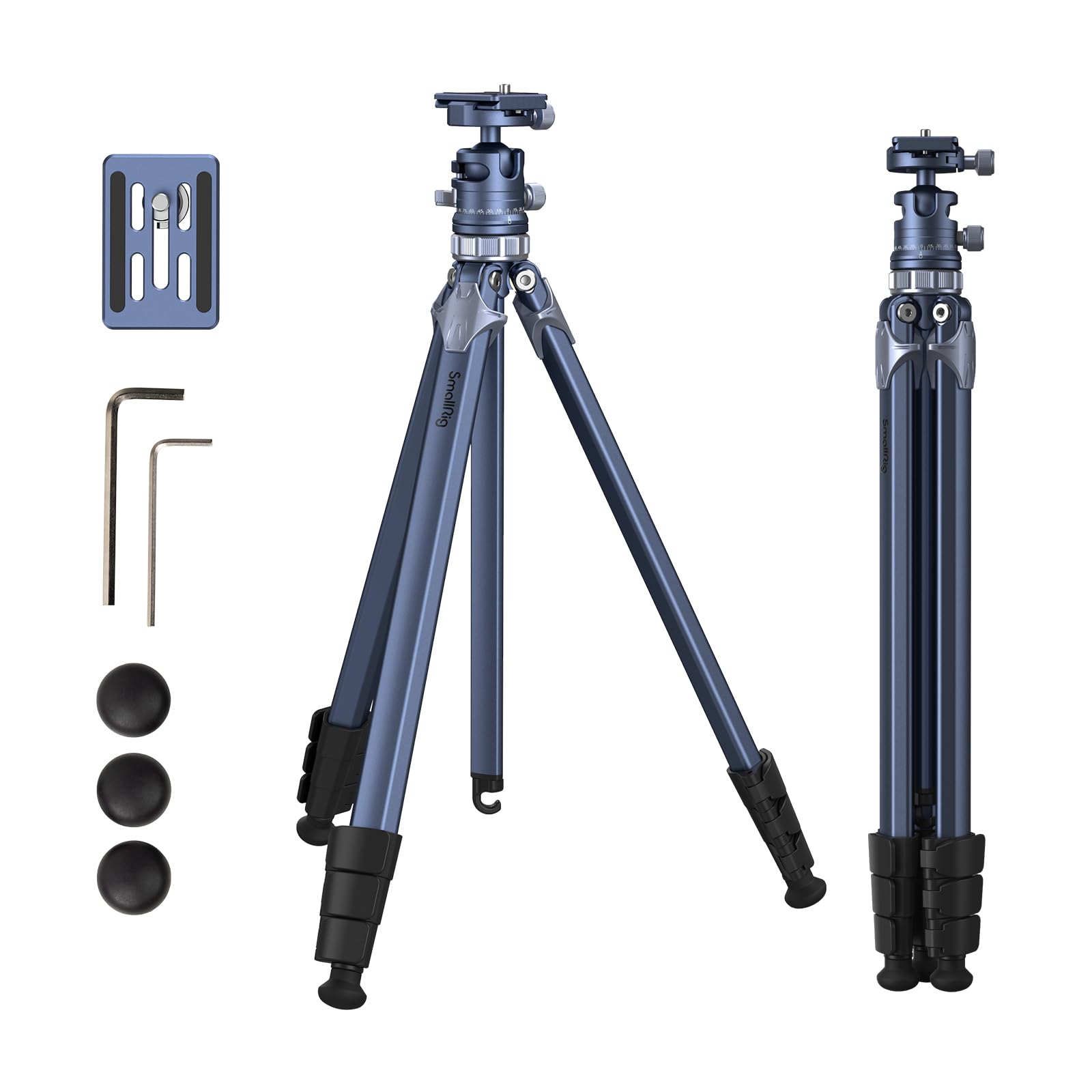
- Folds to 20.8 inches and weighs 2.54 lbs for travel packing.
- The inverted center column supports low-angle and macro work.
- The ball head has two levelers and a 360° scale.
Best For: Travel photographers who want a compact folded tripod with low-angle positioning and accessory mounts.

SmallRig CT200 Horizontal Overhead Tripod
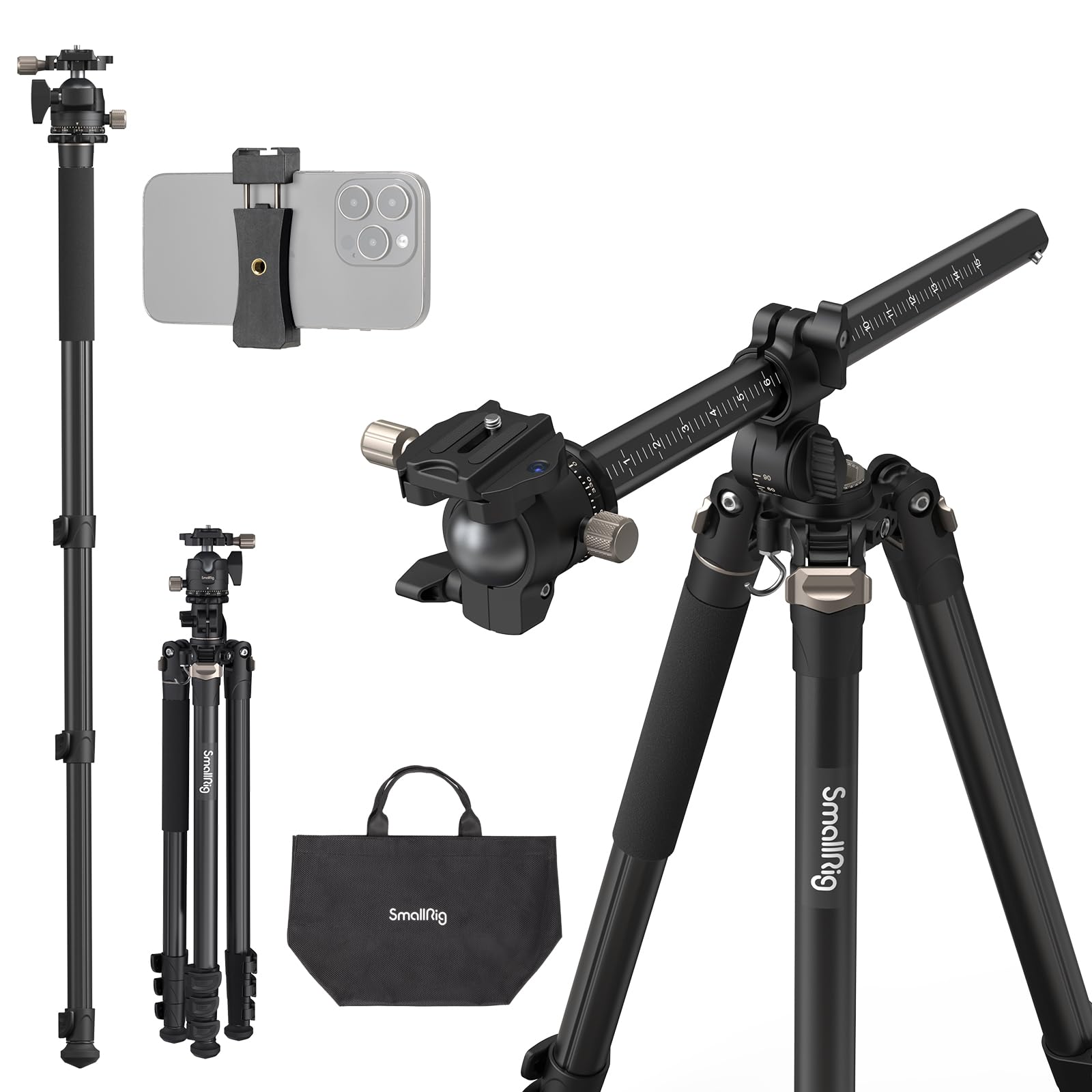
- The center column tilts 180° and rotates 360° for overhead framing.
- It converts to a monopod and has a reversible center column.
- A counterweight bag and carry bag are included.
Best For: Photographers who need overhead framing, low angles, or a monopod option in one aluminum support.
SmallRig AD-50Lite 62-inch Video Tripod
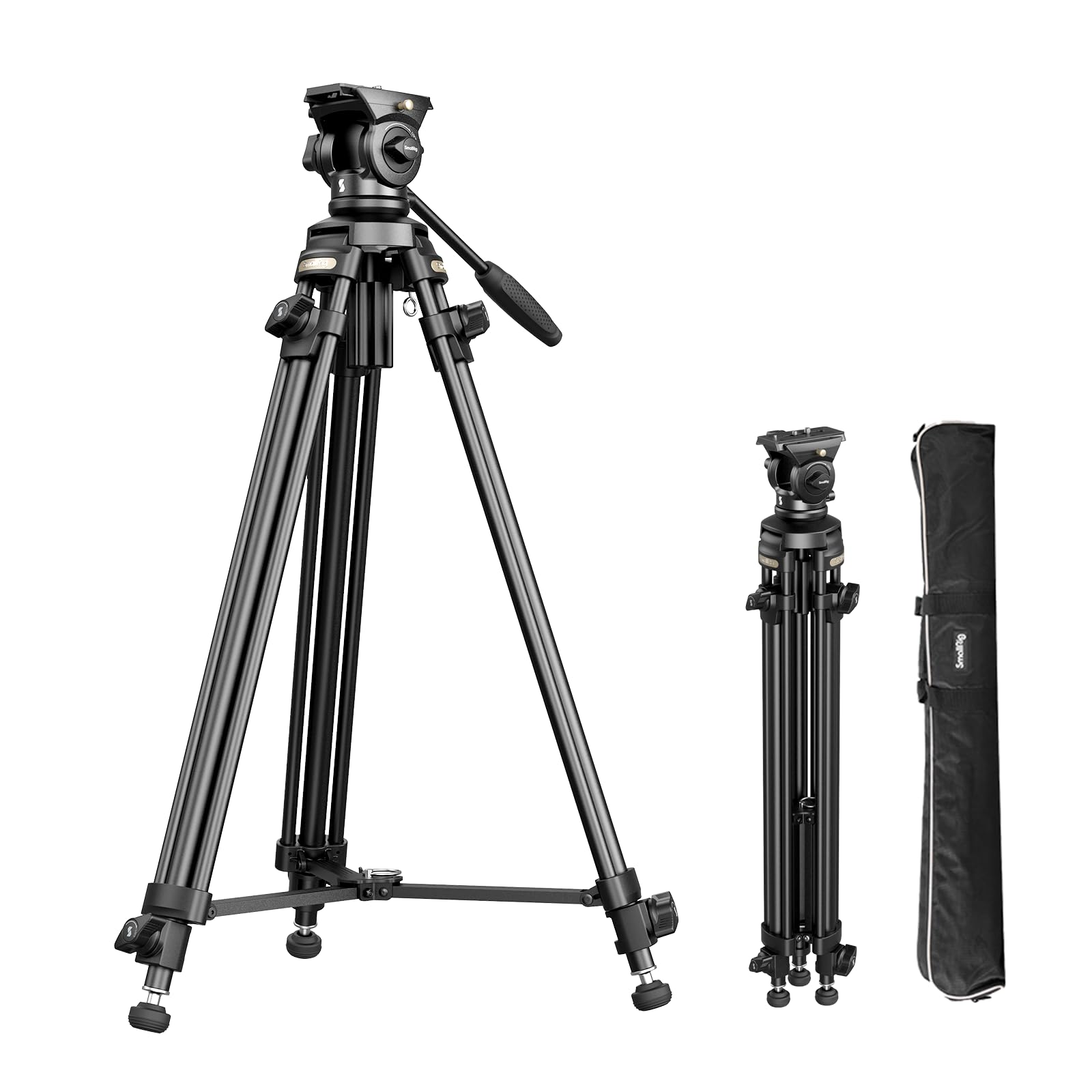
- The detachable head has fixed damping and counterbalance.
- Its height adjusts up to 62.2 inches and it folds to 31.1 inches.
- The kit includes a smartphone holder and storage bag.
Best For: Video shooters seeking a fluid head in a relatively compact tripod kit with a 62-inch maximum height.
SmallRig x Potato Jet Tribex Carbon II 5755
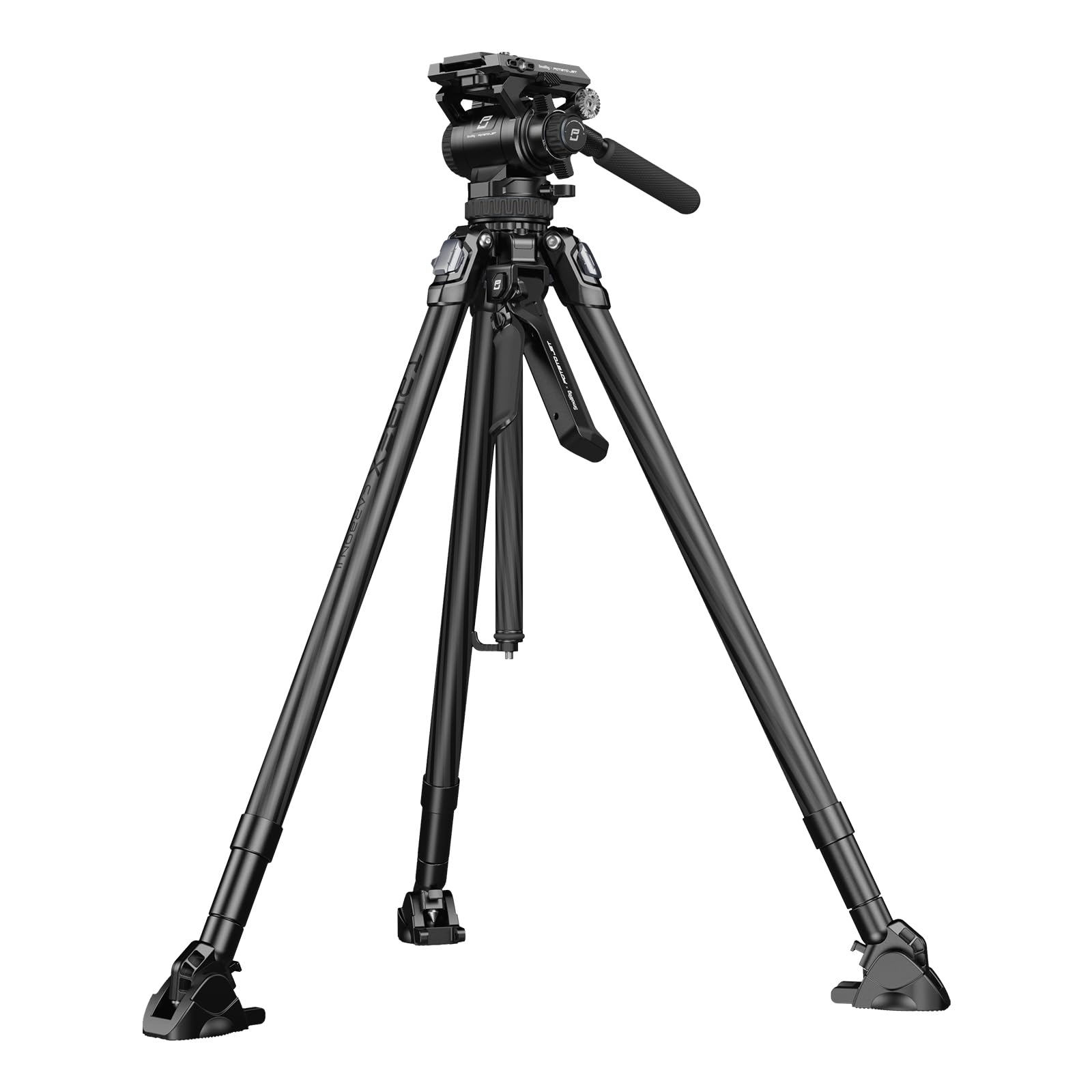
- The X-Clutch system rapidly deploys and locks the legs.
- The head has four counterbalance steps and stepless damping.
- The tripod adjusts from 10.6 to 66.1 inches.
Best For: Video operators who value rapid leg deployment, adjustable counterbalance, and a carbon-fiber build.
SmallRig AD-01 73.2-inch Fluid-Head Tripod
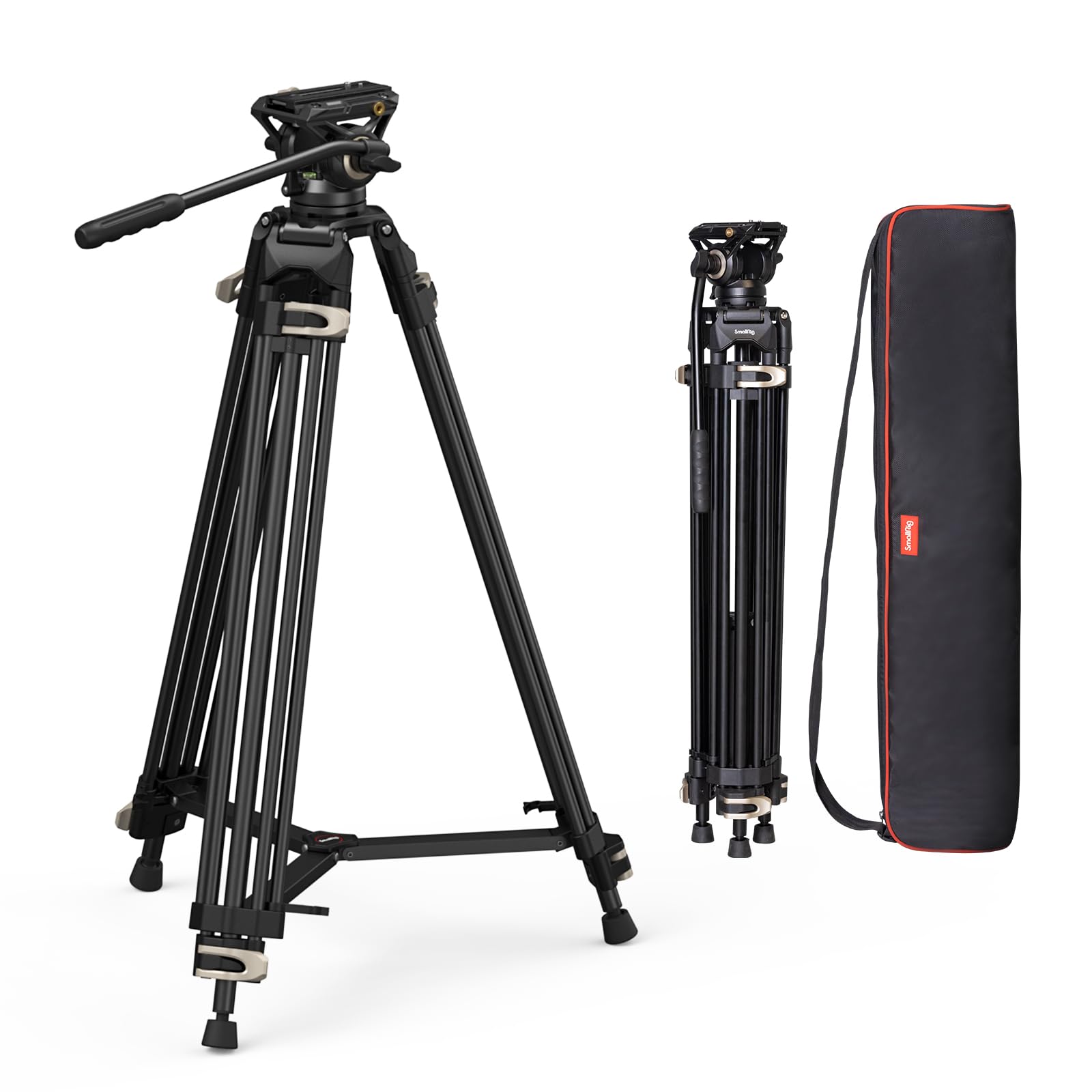
- The tripod adjusts from 33 to 73 inches and supports up to 17 lbs.
- The head pans 360° and tilts +90°/-60°.
- Its dual-mode mount supports DJI RS and MFT 501L plates.
Best For: Video shooters who want a tall aluminum tripod with a fluid head and dual-mode quick-release mounting.
SmallRig AD-120 FreeBlazer Carbon Video Tripod
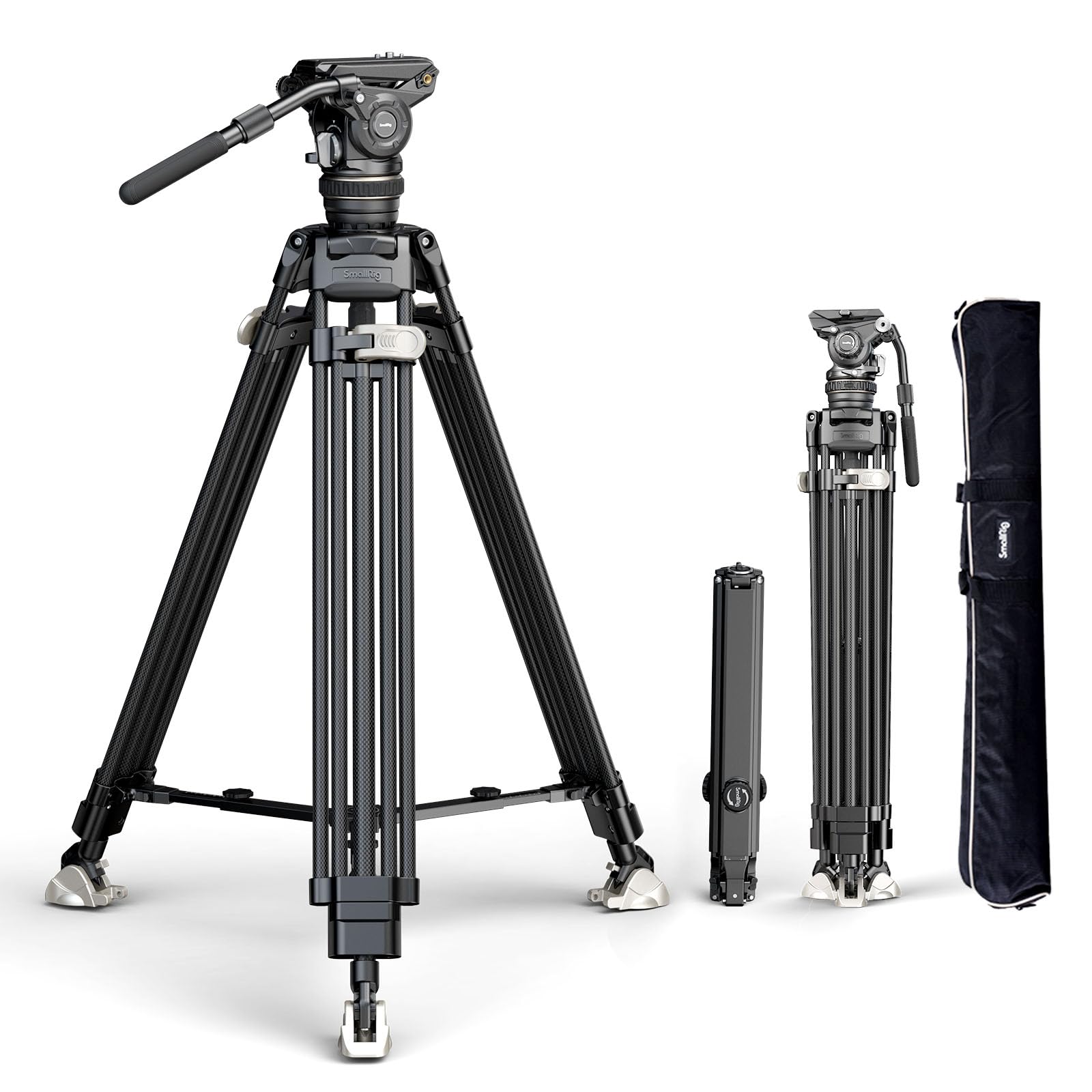
- The head has six counterbalance steps and stepless damping.
- The tripod’s height range reaches 77.6 inches.
- The kit includes interchangeable feet and two spreaders.
Best For: Video operators who want a carbon-fiber FreeBlazer kit with counterbalance, adjustable damping, and interchangeable feet.
SmallRig CT-10 71-inch Tripod and Monopod
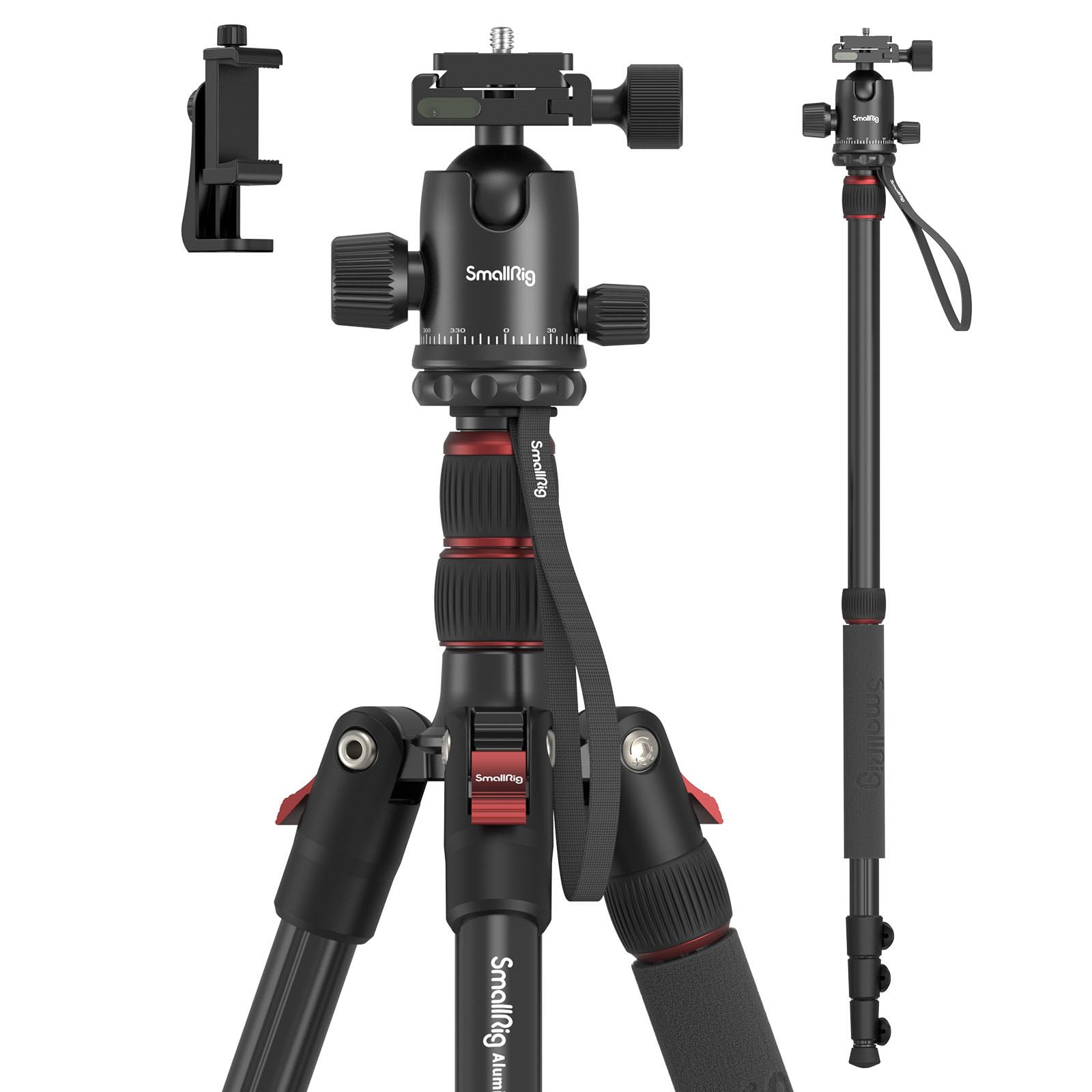
- Converts from tripod to monopod and folds to 16.9 inches.
- The center pole inverts for low-angle and macro photography.
- Its capacity is 33 lbs vertically and 11 lbs when tilted.
Best For: Still photographers who want an adjustable ball head, monopod conversion, and a compact travel fold.
SmallRig x Potato Jet Tribex Carbon II 5756
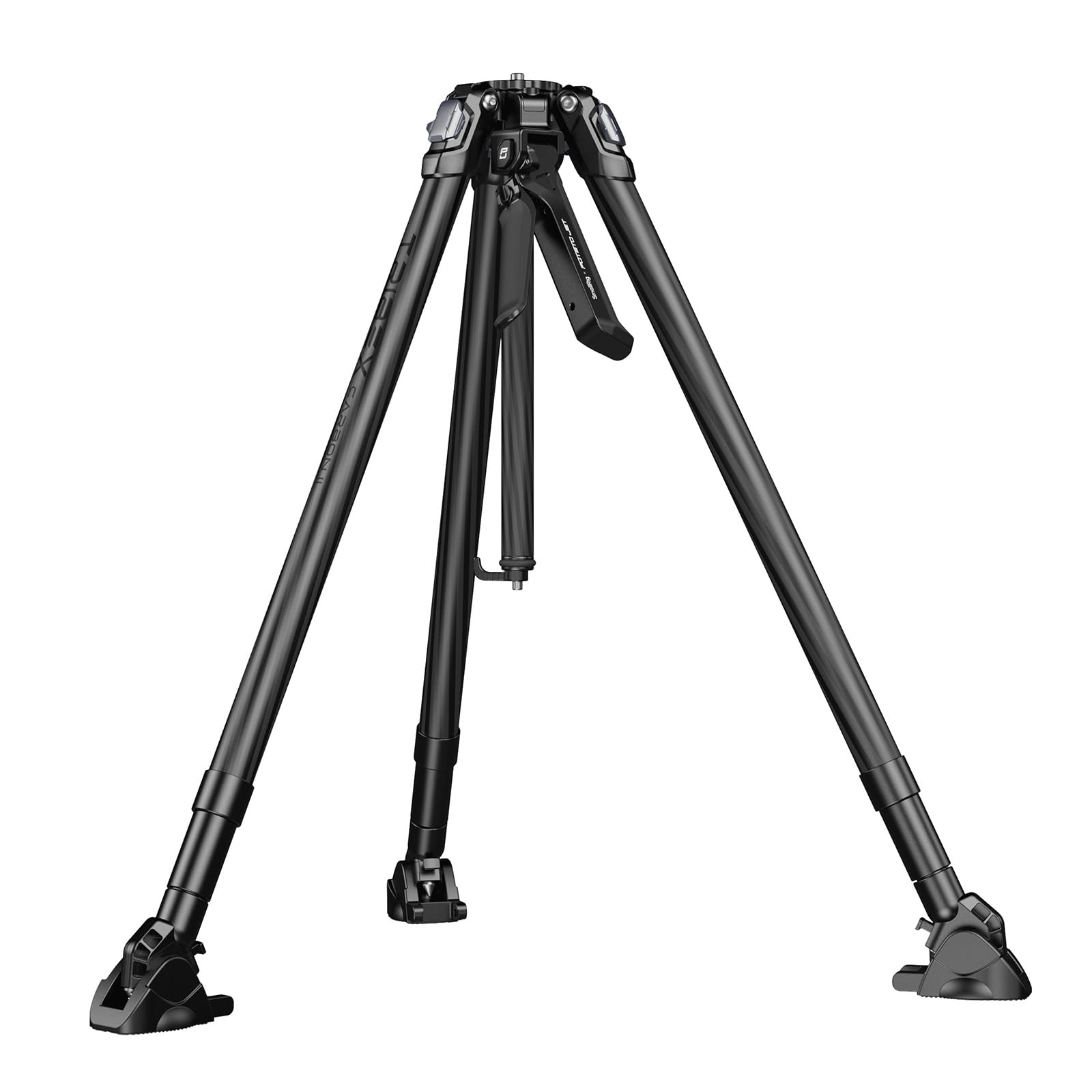
- The legs adjust down to 5.9 inches and up to 61 inches.
- It weighs 5.7 lbs and folds to 26 inches.
- The top has a 3/8-inch screw for a compatible flat-base head.
Best For: Travel and location shooters seeking fast-deploy carbon legs with very low positioning and high stated support.
SmallRig CT180 Video Tripod
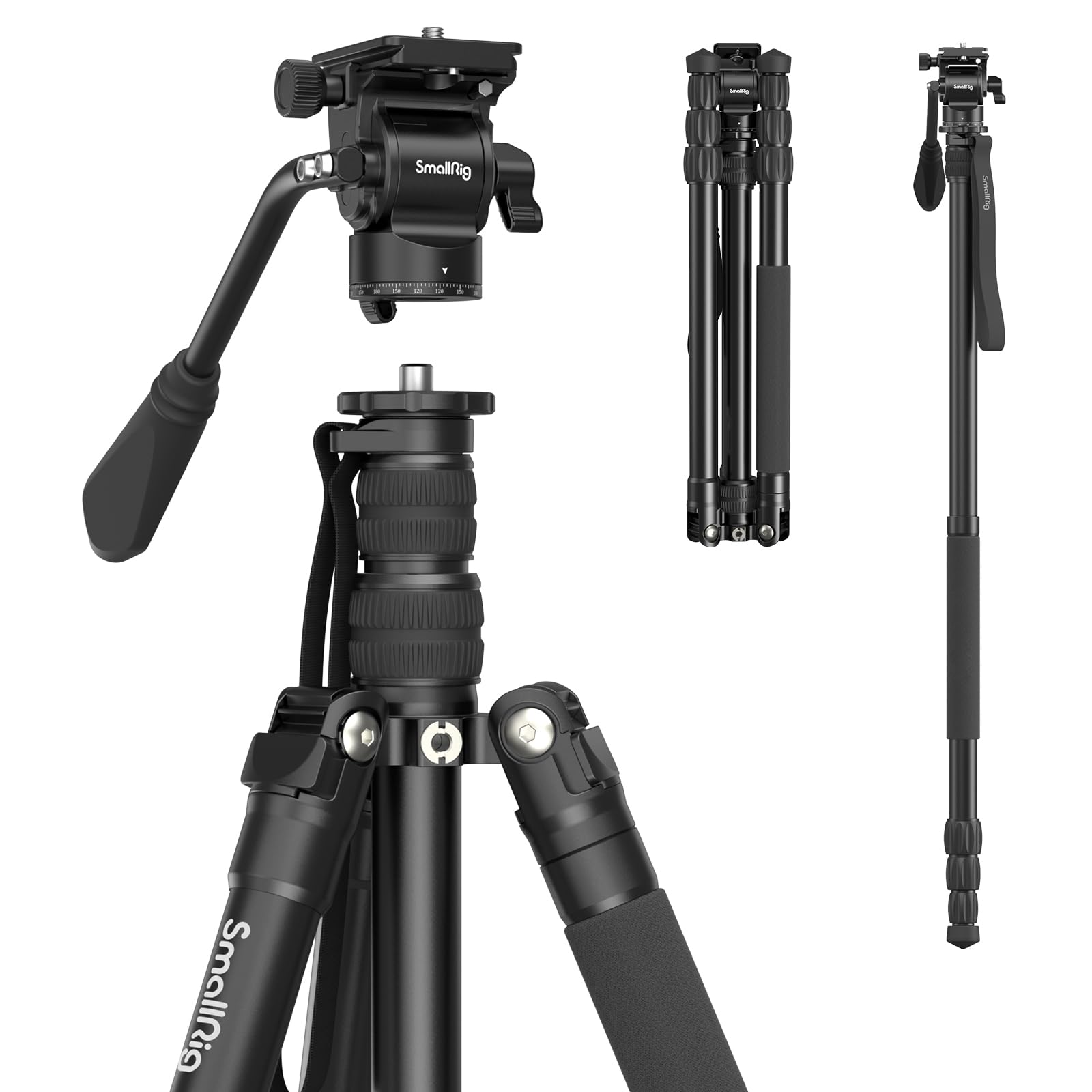
- It converts to a monopod and folds to about 17 inches.
- The fluid head tilts +90°/-55° and rotates 360°.
- A smartphone holder is included for streaming and vlogging.
Best For: Vloggers and mobile video creators who want a fluid head, smartphone holder, and monopod conversion.
SmallRig AD-100 FreeBlazer Carbon Tripod
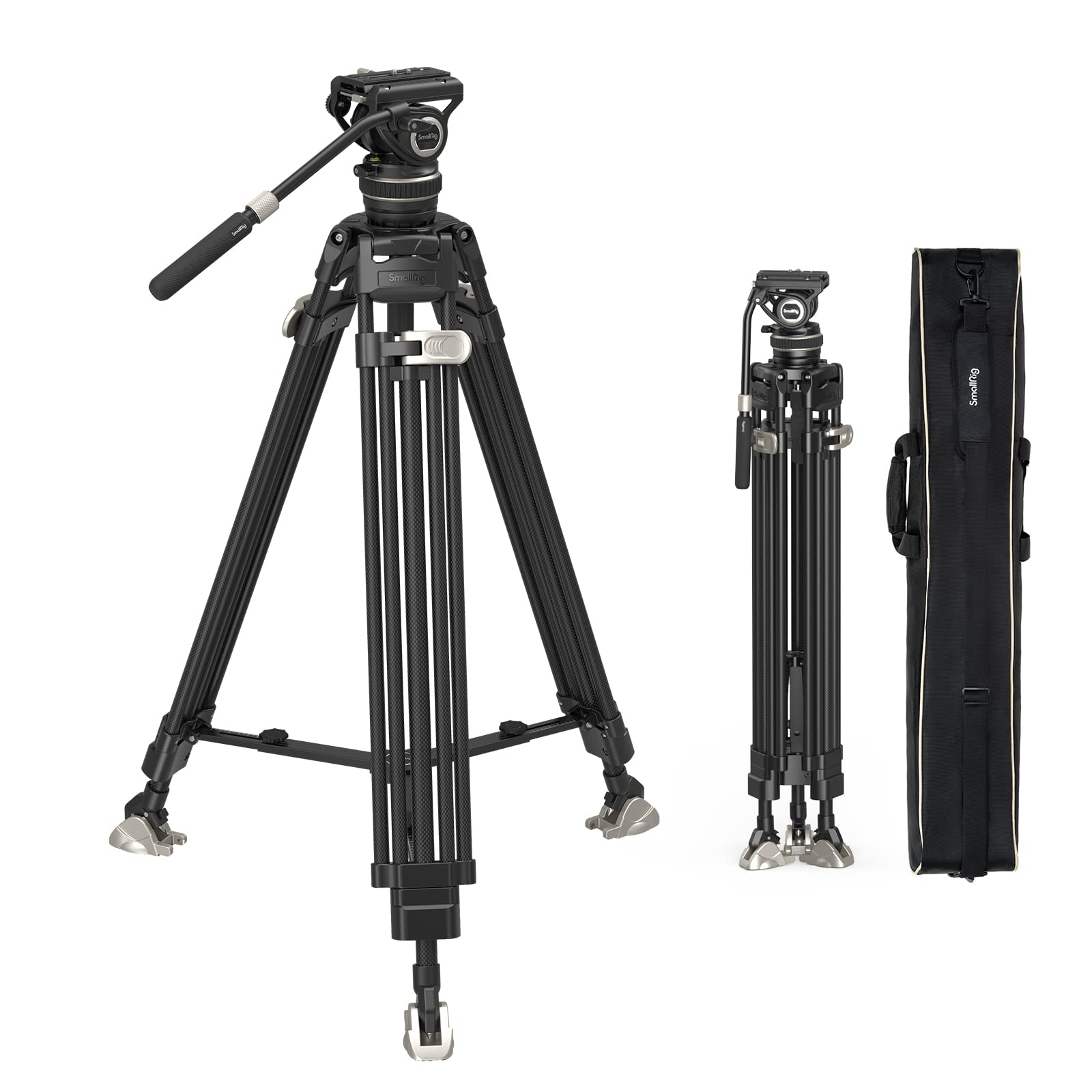
- The tripod reaches 78 inches and folds to 39 inches.
- A one-step locking system locks the legs quickly.
- The head has adjustable damping and supports up to 22 lbs.
Best For: Video crews needing a tall carbon-fiber tripod, one-step leg locking, and a fluid head for controlled pans.
Compact Travel Ball-Head Tripod
SmallRig AP-02 Lightweight Travel Tripod, 63" Camera Tripod with Compact Unconventional Center Column, 360° Ball Head, QR Plate, Travel Bag, Load up to 17.6 lbs / 8 kg, for Most DSLR Cameras -4222
The SmallRig AP-02 packs a ball head, quick-release plate, and carry bag into a travel-focused aluminum tripod. It folds to 20.8 inches and weighs 2.54 lbs, making it a practical option when bag space matters.
Its height adjusts from 16.9 to 62.6 inches, and an inverted center column supports low-angle and macro framing. The head has two built-in levelers and a 360° scale, while three threaded holes accept accessories such as a microphone or monitor.
The 17.6 lb maximum capacity is a useful figure to compare with your complete camera and lens setup before buying.
Best For: Travel photographers who want a compact folded tripod with low-angle positioning and accessory mounts.
| Pros | Cons |
|---|---|
|
|
Choose the AP-02 when compact storage, a ball head, and accessory mounting points matter more than video panning controls. Its 62.6-inch maximum working height is lower than the tallest video systems here, but the short folded size and inverted column add flexibility for travel and close-up framing.
Check the combined camera and lens weight against the 17.6 lb limit, and confirm that its ball head suits the kind of movement you need.
Overhead and Horizontal-Column Framing
SmallRig 72.8"/ 200cm Horizontal Overhead Camera Tripod CT200
The CT200’s defining feature is its horizontal center column, which tilts 180° and rotates 360° for overhead and panoramic camera positions. That design makes it especially relevant for tabletop scenes, product work, and other compositions where the camera needs to extend over a subject.
It also converts to a monopod and supports low-angle work with a reversible center column. The tripod weighs 4.4 lbs and has a 33 lb maximum load, while the tripod head is rated to 22 lbs. A counterweight bag is included, along with a smartphone holder and carry bag.
Best For: Photographers who need overhead framing, low angles, or a monopod option in one aluminum support.
| Pros | Cons |
|---|---|
|
|
Pick the CT200 if overhead positioning is central to your work. Its sideways column offers a camera angle that ordinary center-column tripods do not, and the included weight bag addresses counterweighting as part of that setup.
The tradeoff is a more specialized structure than a basic travel tripod. Before purchasing, distinguish the overall support limit from the lower head limit and confirm both against your camera and lens.
Compact Fluid-Head Video Kit
SmallRig AD-50Lite 62" Video Tripod with Fluid Head, Max. Payload 11lb
The AD-50Lite combines an aluminum tripod with a detachable fluid head, making it a compact option for controlled pan-and-tilt video work. Its height adjusts from 29.5 to 62.2 inches, and it folds to 31.1 inches.
The head uses fixed damping and counterbalance, with 360° panning and +90°/-75° tilt movement. A 65 mm bowl base can work with other tripods using the same base diameter.
At 6.2 lbs, the kit supports up to 11 lbs. It also includes a smartphone holder, storage bag, and hidden spike feet for varied shooting surfaces.
Best For: Video shooters seeking a fluid head in a relatively compact tripod kit with a 62-inch maximum height.
| Pros | Cons |
|---|---|
|
|
Choose the AD-50Lite for video setups that benefit from a fluid head but do not need a very tall stand. Its detachable head and 65 mm bowl base give it some system flexibility, while its 11 lb capacity sets a clear ceiling for the camera rig.
The damping system is fixed, so it is less adjustable than models with selectable or stepless damping. Check the head’s movement and payload needs against your camera, lens, and accessories.
Fast-Deploy Carbon Video Tripod
SmallRig x Potato Jet Tribex Carbon II Hydraulic Carbon Fiber Tripod, Fast Extend Camera Video Tripod with 4-Step Counterbalance Fluid Head,Weight 8.3lbs,Load up to 13.2lbs - 5755
This Tribex Carbon II pairs carbon-fiber legs with a fluid head for video-oriented camera movement. Its X-Clutch system is designed to unfold, set leg angles, and lock the legs with a single clutch action.
The included head provides four counterbalance steps and adjustable stepless damping for pan and tilt. Its working height ranges from 10.6 to 66.1 inches, with a listed load limit of 13.2 lbs. The 8.3 lb tripod includes a storage bag and smartphone holder.
A minimum height of 10.6 inches gives it useful low-angle range, though buyers should compare its load limit with the full camera rig.
Best For: Video operators who value rapid leg deployment, adjustable counterbalance, and a carbon-fiber build.
| Pros | Cons |
|---|---|
|
|
The 5755 fits video work where quick leg deployment and fluid-head controls matter. Its counterbalance settings and stepless damping offer more head adjustment than a basic still-photo ball head, while the 13.2 lb load limit is lower than several heavy-duty video options in this group.
Check the total camera build against that limit and consider whether the 66.1-inch maximum height meets your shooting position. The recorded folded size is not specified, so verify packed dimensions if travel storage is important.
Tall Aluminum Video Support
SmallRig 73.2"/ 186cm Heavy Duty Video Tripod with Fluid Head AD-01
The AD-01 is a full-height aluminum video tripod with a fluid head and double-tube legs. Its working range spans 33 to 73 inches, and its head pans 360° with +90°/-60° tilt movement.
Built-in damping and a balancing system support controlled camera repositioning. The head uses a side-pressed quick-release plate mount and supports two plate modes, including compatibility with DJI RS series plates and MFT 501L plates.
A carrying bag, handle, and built-in bubble level round out the kit. At 8.8 lbs, it is a substantial support to pack, and its 17 lb load ceiling should be checked against your rig.
Best For: Video shooters who want a tall aluminum tripod with a fluid head and dual-mode quick-release mounting.
| Pros | Cons |
|---|---|
|
|
Choose the AD-01 when a tall aluminum support and dual-mode plate compatibility are useful for your camera workflow. Its 73-inch height and 17 lb load capacity suit many video builds, while its 8.8 lb weight calls for planning around transport.
Check that your plate system matches the head and confirm that its damping behavior suits the movements you need; the available details identify damping but do not specify adjustable settings.
Stepless Damping and Counterbalance
SmallRig AD-120 FreeBlazer Counterbalance Carbon Fiber Video Tripod Kit, 77" Video Tripod with 6-Step Counterbalance, Adjust Step-Less Damping on Pan/Tilt, Dual-Mode QR Plate, Max Load 17.6lbs-4463
The AD-120 combines carbon-fiber legs with a fluid head that has six counterbalance steps and adjustable stepless damping. The tripod adjusts from 22.8 to 77.6 inches, and the head pans 360° with +90°/-60° tilt.
Its quick-release mount supports DJI RS series and MFT plates, allowing a compatible setup to move between stabilizer and tripod shooting. Interchangeable flat feet and spikes, plus ground-level and mid-level spreaders, support different placement needs.
The kit weighs 5900 g and has a listed capacity of 17.6 lbs. Check the head’s stated load range when matching it to a camera build.
Best For: Video operators who want a carbon-fiber FreeBlazer kit with counterbalance, adjustable damping, and interchangeable feet.
| Pros | Cons |
|---|---|
|
|
The AD-120 is a good fit when video-head control is a priority: it combines counterbalance steps, stepless damping, dual-mode plate compatibility, and two spreader options. Its 77.6-inch reach is useful for higher camera positions, while the 5900 g kit weight makes carrying a real tradeoff.
The head supports rigs in a stated 1–8 kg range; check your total setup against that range and verify that the included head and leg limits align with your intended build.
Versatile Ball Head and Monopod
SmallRig 71"/ 180cm Aluminum Camera Ball Head Tripod & Monopod CT-10
The CT-10 is an aluminum ball-head tripod that converts to a monopod and folds to 16.9 inches. Its four-section legs adjust from 16 to 71 inches, while the center pole can be inverted for low-angle and macro shooting.
The 36 mm metal ball head rotates 360° and supports horizontal and vertical framing. The tripod’s stated vertical capacity is 33 lbs, while its tilt capacity is 11 lbs, an important distinction when positioning heavier equipment off-axis.
Three threaded accessory holes support add-ons such as a monitor or phone mount. For telephoto lenses, the product notes recommend an additional mount ring or lens support for better balance.
Best For: Still photographers who want an adjustable ball head, monopod conversion, and a compact travel fold.
| Pros | Cons |
|---|---|
|
|
Choose the CT-10 for still photography when you value a ball head, monopod conversion, and a very short folded length. Its stated vertical capacity is high, but the lower tilt rating matters for portrait orientation or other off-axis positions.
The inverted center pole also supports close, low framing. If using a telephoto lens, plan for the additional mount support noted for balance, and compare your camera weight with the head’s tilt limit rather than relying only on the vertical figure.
Low-Angle Carbon-Fiber Legs
SmallRig x Potato Jet Tribex Hydraulic Carbon II Tripod Fast Extend Camera Travel Tripod, Low Angle Photograph to 5.9in/15cm, Max Height 61in/155cm, Weight 5.7lbs, Load up 55lbs -5756
The Tribex Carbon II 5756 is a carbon-fiber tripod leg system designed around quick X-Clutch deployment and low-angle positioning.
It reaches from 5.9 to 61 inches and folds to 26 inches, with a listed weight of 5.7 lbs. Its stated maximum load is 55 lbs when the center column is not raised and the legs are set at the specified position; with the center column raised, the notes give a lower 16.6 lb figure.
The top uses a 3/8-inch screw for a compatible flat-base head, so a head is not identified as part of the kit. It includes a carry bag and features integrated spikes in the rubber feet.
Best For: Travel and location shooters seeking fast-deploy carbon legs with very low positioning and high stated support.
| Pros | Cons |
|---|---|
|
|
Select the 5756 if you need carbon-fiber legs that deploy quickly and reach close to the ground. Its 55 lb figure is conditional, and the notes give a lower limit with the center column raised, so use the applicable configuration when assessing a rig.
The top is a 3/8-inch screw interface for a compatible head; confirm whether you already own the right head before purchasing. Its 26-inch folded length offers travel practicality, though it is not the shortest option here.
Travel Video Tripod with Monopod Mode
SmallRig CT180 Video Tripod, 72" Camera Tripod Monopod with Fluid Head, Aluminum Camera Tripod, 360° Panorama Fluid Head for Travel, Video, Live Streaming, Vlogging- 3760B
The CT180 combines an aluminum tripod with a compact fluid head and monopod conversion. It folds to about 17 inches and adjusts to 72 inches as a tripod, or 74 inches in monopod mode.
The head has fixed damping, rotates 360°, and tilts +90°/-55°. Its quick-release plate is Arca-type, and a smartphone holder comes in the kit.
The notes give separate capacity figures for the support and head: up to 33 lbs for the tripod and 6.6 lbs for the fluid head. That distinction is essential when matching it to a camera.
The 1700 g weight makes it a more portable video option than the larger fluid-head systems.
Best For: Vloggers and mobile video creators who want a fluid head, smartphone holder, and monopod conversion.
| Pros | Cons |
|---|---|
|
|
The CT180 suits creators who want one support for camera video, live streaming, and occasional monopod use. Its compact folded size and included phone holder are practical for moving between setups.
The head, however, has a 6.6 lb limit even though the tripod legs have a higher stated limit, so size the complete camera build to the head. Its damping is fixed, which keeps the head straightforward but gives less tuning flexibility than adjustable-damping video heads.
Tall Carbon Fiber Video Tripod
SmallRig AD-100 FreeBlazer Heavy-Duty Carbon Fiber Tripod System, 78" Video Tripod with One-Step Locking System, 360° Fluid Head and Dual-Mode Quick-Release Plate, Max Load 22 lbs for Camera -3989
The AD-100 FreeBlazer is a carbon-fiber video tripod with a 360° fluid head and one-step leg locking. Its working height ranges from 37 to 78 inches, giving it the tallest reach among these selected full-size options.
The head offers adjustable stepless damping and +90°/-60° tilt, while a dual-mode quick-release mount supports compatible DJI RS and MFT plates. It can carry up to 22 lbs and weighs 11 lbs, with a 39-inch folded length.
The detachable 75 mm bowl, interchangeable wide and spike feet, and carrying bag suit production setups that need leveling and flexible footing. Its folded length and weight are worth considering for travel.
Best For: Video crews needing a tall carbon-fiber tripod, one-step leg locking, and a fluid head for controlled pans.
| Pros | Cons |
|---|---|
|
|
Choose the AD-100 when you need height, carbon-fiber legs, and a fluid head with adjustable damping. It also supports quick leg locking and interchangeable feet for setup changes.
The 22 lb capacity is comparatively useful for heavier camera builds, but its 11 lb weight and 39-inch folded length make it less convenient for compact travel than shorter still-photo tripods. Check that the camera’s plate matches the dual-mode mount and that the head’s movement range fits your shooting style.
How to Choose Camera Tripods
How We Picked Camera Tripods
The shortlist covers still photography, compact travel, overhead compositions, and video movement because camera tripod needs change with the kind of work. We favored complete camera supports with a distinct use case, such as an inverted center column for macro framing, a monopod conversion for location work, or a fluid head for controlled pans.
Tripods intended mainly for laser levels, flexible mounting, tabletops, or sale as legs without a head do not serve the same broad set of camera needs, so they are not among the featured picks.
Check the included head before comparing load figures. A tripod’s leg capacity may exceed its head’s rating, as with the CT180 and CT200, and some products specify different limits for vertical and tilted positions.
Match the relevant limit to your camera, lens, and accessories together.
Comparing Camera Tripod Types
Ball-head supports such as the AP-02 and CT-10 are aimed at still photography and flexible framing. They can reposition a camera quickly, and the CT-10 adds monopod conversion.
For overhead product photography, the CT200’s horizontal column reaches out over a subject. A standard center column cannot provide that same sideways reach.
Video tripod systems use fluid heads and leg designs built for panning and tilting. The AD-50Lite offers a detachable head with fixed damping in a shorter package, while the AD-120 adds counterbalance steps and adjustable damping.
The AD-100 extends to 78 inches and supports a 22 lb load, but its 39-inch folded length and 11 lb weight take up more room.
| Product | Standout features | Best for |
|---|---|---|
| SmallRig AP-02 Lightweight Travel TripodCheck Price |
| Travel photographers who want a compact folded tripod with low-angle positioning and accessory mounts. |
| SmallRig CT200 Horizontal Overhead TripodCheck Price |
| Photographers who need overhead framing, low angles, or a monopod option in one aluminum support. |
| SmallRig AD-50Lite 62-inch Video TripodCheck Price |
| Video shooters seeking a fluid head in a relatively compact tripod kit with a 62-inch maximum height. |
| SmallRig x Potato Jet Tribex Carbon II 5755Check Price |
| Video operators who value rapid leg deployment, adjustable counterbalance, and a carbon-fiber build. |
| SmallRig AD-01 73.2-inch Fluid-Head TripodCheck Price |
| Video shooters who want a tall aluminum tripod with a fluid head and dual-mode quick-release mounting. |
| SmallRig AD-120 FreeBlazer Carbon Video TripodCheck Price |
| Video operators who want a carbon-fiber FreeBlazer kit with counterbalance, adjustable damping, and interchangeable feet. |
| SmallRig CT-10 71-inch Tripod and MonopodCheck Price |
| Still photographers who want an adjustable ball head, monopod conversion, and a compact travel fold. |
| SmallRig x Potato Jet Tribex Carbon II 5756Check Price |
| Travel and location shooters seeking fast-deploy carbon legs with very low positioning and high stated support. |
| SmallRig CT180 Video TripodCheck Price |
| Vloggers and mobile video creators who want a fluid head, smartphone holder, and monopod conversion. |
| SmallRig AD-100 FreeBlazer Carbon TripodCheck Price |
| Video crews needing a tall carbon-fiber tripod, one-step leg locking, and a fluid head for controlled pans. |
Choosing a Tripod for Travel Photography
For travel, consider packed length and weight alongside working height. The AP-02 folds to 20.8 inches and weighs 2.54 lbs, while the CT-10 folds to 16.9 inches and can also serve as a monopod.
The CT180 folds to about 17 inches and includes a fluid head, but its head capacity is 6.6 lbs. The Tribex 5756 carbon legs fold to 26 inches and weigh 5.7 lbs; they need a compatible head for a complete setup.
A taller maximum height can reduce how often you need to crouch, but it usually changes the tripod’s packed size or weight. Compare the specified operating range with where you shoot most often.
For very low compositions, look for an inverted or removable center column, or a tripod with a low minimum height.
Matching the Head to Your Camera Work
A ball head supports quick still-photo repositioning and portrait framing. A three-way head offers separate movements, while a video fluid head is designed for pan and tilt motion.
Head controls differ: the AD-120 has stepless damping and six counterbalance steps, and the Tribex 5755 offers four counterbalance steps with stepless damping. The AD-50Lite uses fixed damping, so it has fewer adjustment choices.
Plate compatibility matters when you already use a quick-release system or stabilizer. The AD-01 supports DJI RS and MFT 501L plate modes, while the CT180 uses an Arca-type quick-release plate.
Confirm the exact plate standard and whether the included plate matches your camera workflow before choosing.
Who Should Buy Which Camera Tripod
Travel photographers should start with the AP-02 or CT-10, choosing between the AP-02’s low weight and the CT-10’s monopod conversion and shorter folded size. Product photographers who need to position a camera above a scene should consider the CT200’s horizontal column.
Vloggers who switch between a phone and camera may prefer the CT180, provided their camera build fits the fluid head’s 6.6 lb limit.
Video crews should compare the AD-50Lite, AD-120, AD-100, and Tribex 5755 by head movement, load capacity, height, and carrying demands. The AD-50Lite offers a shorter setup with fixed damping; the AD-120 adds counterbalance and stepless damping; the AD-100 prioritizes tall reach and a 22 lb capacity; and the Tribex 5755 emphasizes fast leg deployment.
Check all included components and relevant head limits before settling on a model.